
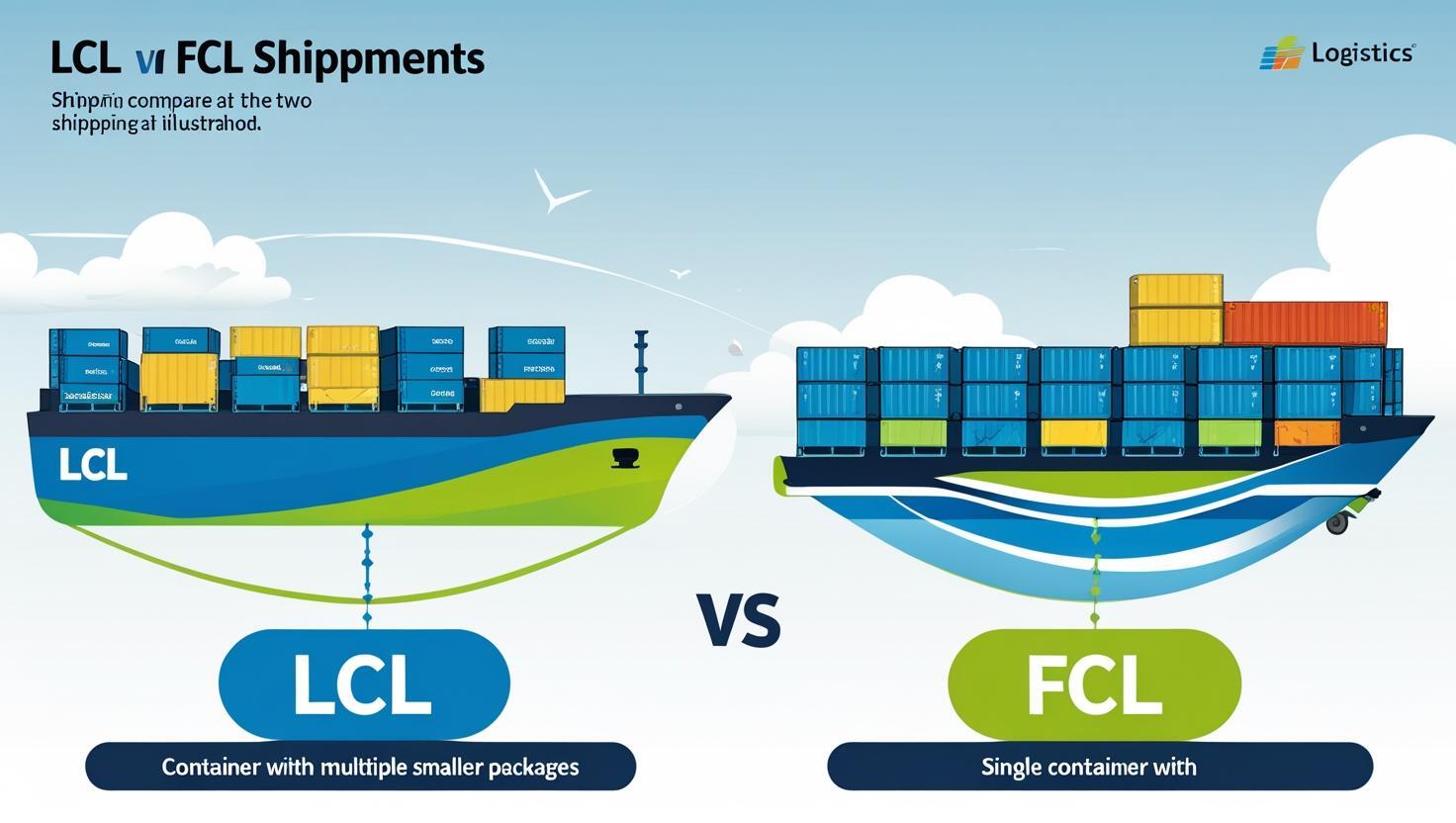
If you're importing or exporting products internationally—especially from manufacturing hubs like China or India—understanding the difference between LCL (Less than Container Load) and FCL (Full Container Load) shipping is essential.
Each has its own benefits, costs, and best-use scenarios. This blog post breaks it all down with real-world examples, clear explanations, and a comparison chart to help you make smarter logistics decisions.
🔍 What is LCL Shipping?
LCL (Less than Container Load) is when your cargo doesn’t fill an entire shipping container, so it is consolidated with cargo from other shippers.
✅ Key Features of LCL:
You pay only for the space your cargo uses (measured in CBM).
Ideal for small shipments (typically under 15 CBM).
Offers cost savings for smaller volumes.
Involves more handling due to consolidation and deconsolidation at ports.
🚛 What is FCL Shipping?
FCL (Full Container Load) means you book an entire container for your goods, regardless of whether you fill it completely.
✅ Key Features of FCL:
Offers exclusive use of the container.
Best for large shipments or high-value goods.
Lower cost per unit if volume is high enough.
Faster transit times and less handling, reducing damage risk.
📦 Container Size Reference
Container Type | Dimensions (approx.) | Max Volume (CBM) |
20ft Container | 5.9m x 2.35m x 2.39m | ~33 CBM |
40ft Container | 12.03m x 2.35m x 2.39m | ~67 CBM |
40ft High Cube | 12.03m x 2.35m x 2.69m | ~76 CBM |
⚖️ LCL vs FCL: Key Differences
Feature | LCL (Less than Container Load) | FCL (Full Container Load) |
Volume | Small (Usually < 15 CBM) | Large (Typically > 15 CBM) |
Cost Basis | Per CBM | Per container |
Shipping Time | Slightly longer | Faster |
Handling | More handling, higher damage risk | Minimal handling, safer |
Customs Clearance | Shared with others | Single consignee |
Ideal For | Startups, trial orders, small businesses | Bulk shipments, regular importers |
🕒 When to Choose LCL
LCL is the best option when:
You’re testing a new supplier or market.
Your cargo volume is below 12-15 CBM.
You're not in a hurry and want to save money on freight.
You're combining multiple small orders from different suppliers.
💼 When to Choose FCL
FCL is more suitable when:
You want maximum control and security over your goods.
You are shipping fragile, high-value, or time-sensitive products.
Your cargo volume is above 15 CBM (economically viable).
You want to avoid delays caused by other LCL shipments.
📦 Real-World Example
Case 1: Small Business from USA importing 8 CBM of textiles from India
➤ LCL is cheaper than booking a whole 20ft container. The business pays only for 8 CBM.
Case 2: Large Buyer importing 35 CBM of electronics from China
➤ FCL is better as they can use a 40ft container for better per-unit shipping rates and faster delivery.
✈️ Can You Use LCL or FCL for Air Freight?
These terms are typically used for sea freight, but similar concepts apply in air freight:
Consolidated Air Freight = LCL (shared cargo space)
Dedicated Air Charter or Full Pallet Load = FCL (exclusive air space)
💰 Cost Comparison Tips
LCL looks cheaper at low volumes, but charges like handling, documentation, and deconsolidation can add up.
FCL has higher upfront cost, but more cost-effective for large shipments.
Always compare total landed cost, not just the freight charge.
✅ Conclusion: Which is Right for You?
Scenario | Best Choice |
Importing small quantities | LCL |
Wanting fast and safe shipping | FCL |
Limited budget or first-time import | LCL |
High-volume, regular shipments | FCL |
Pro Tip: If your cargo is close to 13-15 CBM, compare both LCL and FCL quotes. You might find FCL more economical and faster.